
Premium Waco Soil Calculator | Mulch, Topsoil, Fill Dirt & Cost Estimator
Estimate soil, topsoil, mulch, sand, bags, truck loads, wheelbarrow trips, and cost
Your Results
Enter dimensions and click calculate.
Call for soil delivery, spreading, lawn leveling, mulch, or yard cleanup.
(254) 777-8151
How this Waco soil calculator helps
This calculator estimates cubic yards, cubic feet, bag quantity, truck loads, wheelbarrow trips, and possible material cost. It is useful for topsoil, fill dirt, mulch, sand mix, lawn leveling, garden beds, raised beds, and low spots.
- For Waco clay soil: avoid burying grass with too much material at one time. For lawn leveling, lighter layers are usually safer.
- For mulch beds: 2 to 3 inches is common for refreshing beds. Too much mulch against plants can hold excess moisture.
- For raised beds: deeper soil needs more cubic yards quickly, so bulk delivery may be cheaper than bags.
- For low spots: use the compaction factor because soil settles after watering and traffic.
Waco Soil Calculator | Complete User Guide
This guide explains how to use each part of the calculator correctly so you get accurate material estimates for lawn leveling, garden beds, fill areas, and general landscaping in Waco and Central Texas. If you follow these steps carefully, you can avoid under-ordering or wasting money on extra material.
How to Use the Waco Soil Calculator
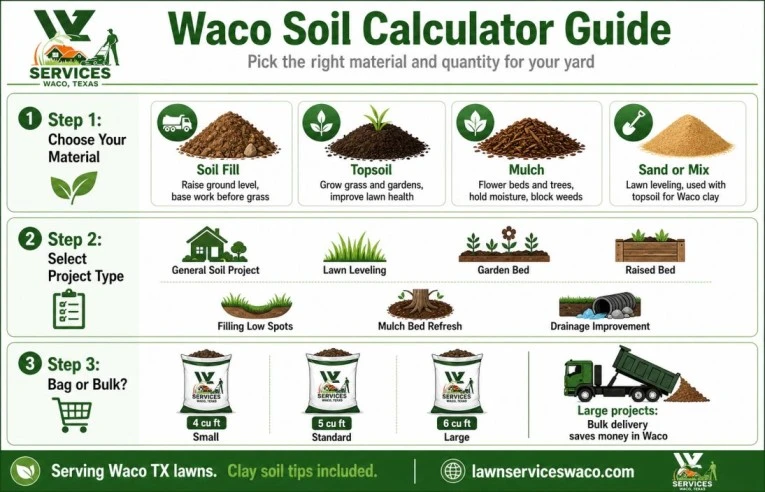
Below is an infographic which shows how to correctly use our Waco soil calculator to estimate the right material, project type, and quantity for your yard. Whether you are leveling a lawn, building a raised bed, or refreshing mulch, choosing the right material and size ensures better results and avoids extra cost. For larger projects in Waco, bulk soil delivery is often more efficient than buying multiple bags.
Choosing the Right Material for Your Soil
At the top of the calculator, you will see four options. Each one is used for a different type of project.
Soil Fill
Use this when you need to raise ground level, fill low areas, or prepare land before installing grass. This is not fine soil, so it is mainly for base work.
Topsoil
Best for improving soil quality, growing grass, or garden beds. If your goal is better plant growth or lawn health, this is usually the correct option.
Mulch
Used for flower beds, trees, and landscaping areas. It helps retain moisture and control weeds. This is not used for leveling or filling.
Sand or Mix
Common for lawn leveling, especially with Bermuda grass. In Waco, sand is often mixed with topsoil instead of being used alone, especially on clay-heavy yards.
Selecting Area Shape
Choose the shape that matches your area. This directly affects how the calculator measures your space.
Rectangle
For most yards, lawns, and flat areas. Enter length and width.
Square
Same as rectangle but equal sides. You only need one measurement.
Circle
Used for round beds, tree areas, or curved landscaping sections. Enter the radius.
Triangle
Useful for corner areas or irregular shapes that can be divided into triangles.
If your yard is irregular, break it into multiple simple shapes and calculate them separately, then add the results.
Entering Dimensions
Accurate measurements are the foundation of a reliable estimate. Small errors in length, width, or depth can significantly change the final volume, especially on larger areas.
Length and Width
Measure in feet. Try to be as accurate as possible. Even small mistakes can change your total volume.
Depth
Enter in inches. This is one of the most important fields.
General guidance:
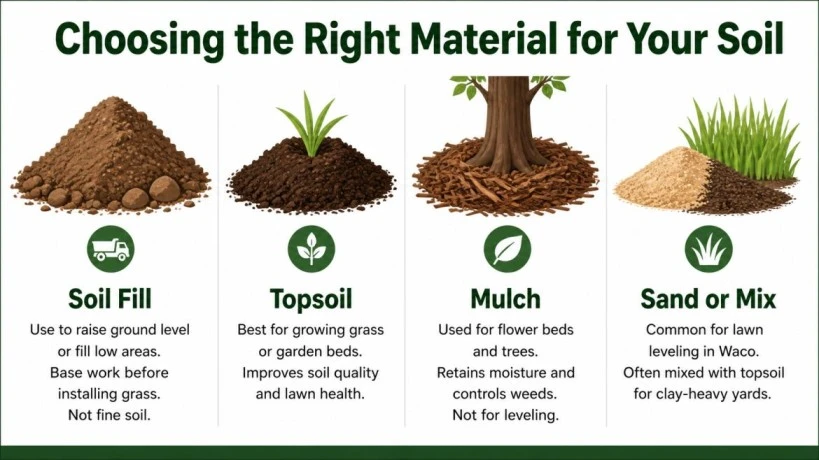
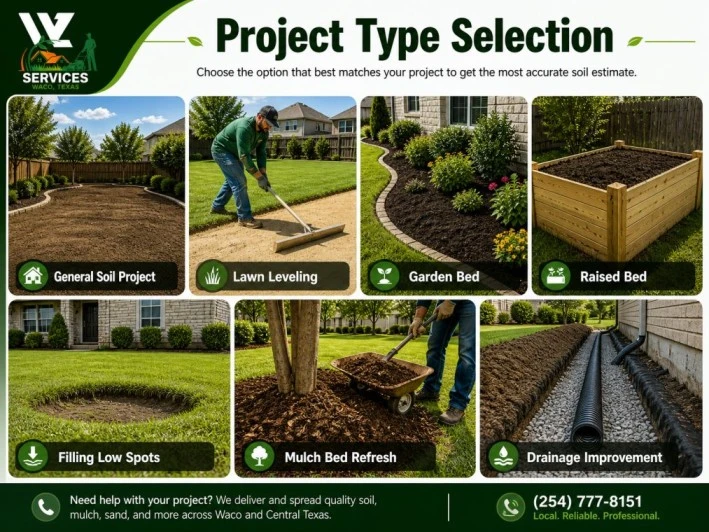
Project Type Selection
This section helps adjust recommendations based on your goal.
General Soil Project
Use this if your project does not fall into a specific category.
Lawn Leveling
For smoothing uneven lawns. Typically requires a thin layer to avoid damaging existing grass.
Garden Bed
Used for planting areas where soil quality matters.
Raised Bed
Requires deeper soil because plants rely entirely on that soil.
Filling Low Spots
Used when parts of your yard sit lower than others. These areas usually need extra material.
Mulch Bed Refresh
For topping up existing mulch in beds.
Drainage Improvement
Used when water pooling is an issue. Material choice becomes important here.
Compaction and Waste Factor
This setting adds extra material to account for settling, spreading loss, and uneven ground.
No Extra
Only use if your measurements are exact and ground is perfectly even.
Light plus 10 percent
For simple projects with minimal waste.
Standard plus 15 percent
Best general setting. Works well for most jobs.
Heavy plus 25 percent
Recommended for uneven yards or fill projects.
Very Heavy plus 35 percent
Use when dealing with large low areas or rough terrain.
In Waco clay soil, material tends to settle after watering, so using at least the standard option is usually safer.
Soil Condition Selection
This reflects the condition of your yard and helps guide better estimates.
Normal Yard Soil
Typical residential soil with no major issues.
Heavy Clay Soil
Very common in Waco. Clay holds water and compacts easily. It may require careful layering.
Sandy or Loose Soil
Drains quickly but may shift or settle.
Uneven Yard or Low Spots
Used when your yard is not level. Expect higher material needs.
New Construction Yard
Often compacted and poor-quality soil. These areas usually need more improvement work.
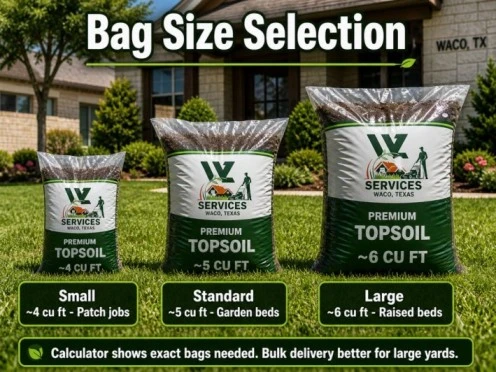
Bag Size Selection
If you plan to buy soil in bags, choose the correct size.
Common options:
The calculator converts your total volume into the number of bags required.
For small jobs, bags are fine. For larger projects, bulk delivery is usually more cost-effective.
Pricing Fields
This section helps you decide whether bulk or bag purchase makes more sense.
Bulk Price Per Cubic Yard
Enter the price from your local supplier.
Bag Price Each
Used to compare cost if buying bags instead of bulk.
Delivery Fee
Add your local delivery estimate to see total cost.
Wheelbarrow Size
This helps estimate how much manual work is required.
Small
Less capacity, more trips.
Standard
Balanced option for most homeowners.
Large
Fewer trips but heavier loads.
The calculator uses this to estimate how many trips it will take to move material.
Calculating Results
Once all inputs are entered, click Calculate. You will see:
Cubic Yards
Used for ordering bulk material.
Cubic Feet
Useful for understanding smaller quantities.
Number of Bags
If buying bagged material.
Cost Estimate
Based on your pricing inputs.
Wheelbarrow Trips
Helps estimate labor effort.
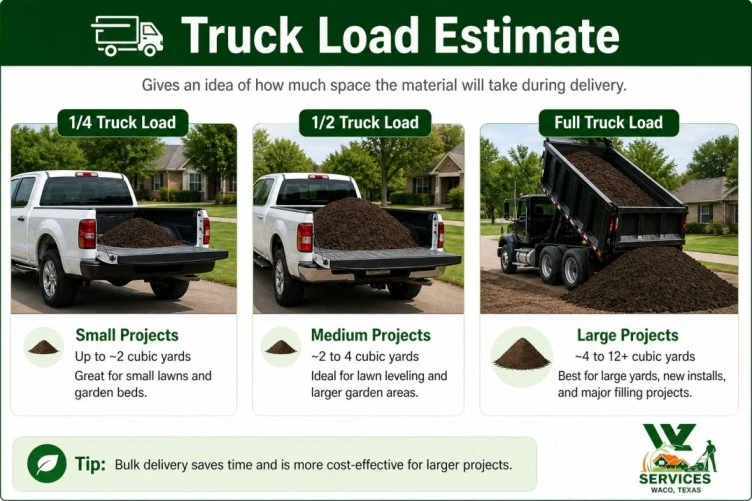
Truck Load Estimate
Gives an idea of how much space the material will take during delivery.
Practical Tips for Better Accuracy
Local Advice for Waco Yards
In Central Texas, many yards have clay soil. This means:
If you are unsure, it is better to start with a moderate estimate and adjust based on results.
When to Get Professional Help
If your project includes:
It may be more efficient to get professional assistance.
Greenify Waco handles soil delivery, spreading, lawn leveling, mulch installation, and yard improvement across Waco and surrounding areas. This calculator helps you estimate your needs, but proper execution can save time and reduce mistakes.
Final Note
This soil calculator is designed to give practical, real-world estimates. The more accurately you measure and select your options, the closer your results will be to actual requirements.